
“The future of Africa is youth!” A compelling refrain that must be given substance or become sloganeering. Africa boasts the youngest population with 70% under the age of 30 (UN, 2026) and 400 million aged 15 -35 according to the African Union. While youth form the majority and are proactive in finding solutions to issues affecting their continent, they often occupy the margins, if not completely excluded from decision-making spaces and processes.
Another challenge is the prevailing ways of engaging young people – largely event-driven. In South Africa, we see a swell of youth-focused events and messaging around Youth Month (June) and then radio silence. Furthermore, much of what counts as youth engagement treats young people merely as subjects of research or statistics. Within this, what is measured about youth is often limited to [un]employment, crime and violence.
June 2026 marks 10 years of SACN’s engagement with youth and the urban. SACN has done so with the clear intention of countering the status quo. Mindful that, to be meaningful, youth engagement must be sustained, SACN moved beyond events to a programmatic approach. Over the years, its process has unearthed many practical examples of how to engage, empower, include and co-create cities with young people.
What meaningful youth engagement looks like: examples from the SACN experience
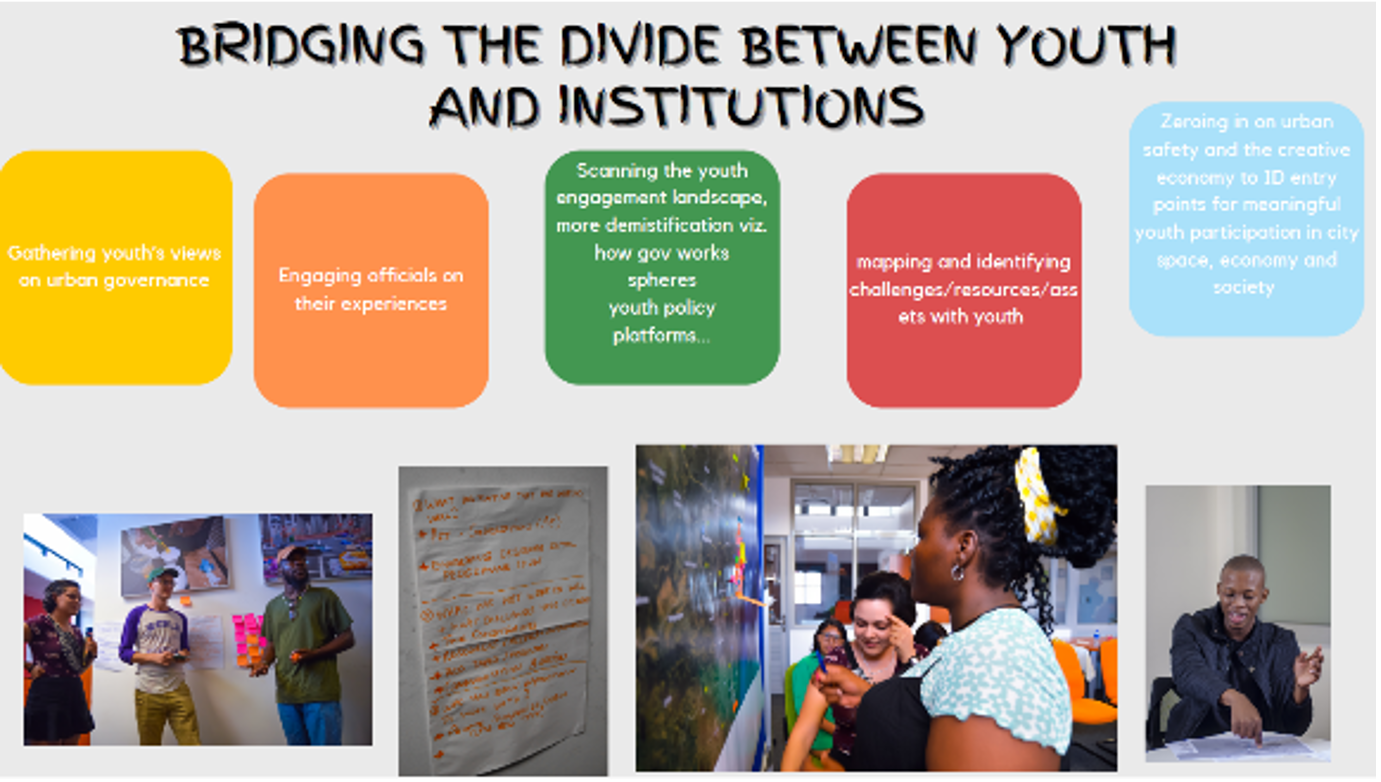
Navigating government: Beginning with a film screening and dialogue in 2016 to understand the challenges and opportunities, SACN found the primary challenge to be the opacity of systems and institutions and difficulties in navigating them. This finding was addressed through several interventions to demystify government and facilitate conversation between young people and decision-makers.
Evidence-informed solution finding: We found that youth in organised and semi-organised structures are already solving local problems. To support their initiative and drive, SACN considered it important to equip young people with the tools to harvest and utilise evidence in identifying problems, drivers and solutions. It provided 6 weeks of in-depth training for youth across three cities in the application of the Participatory Action Research (PAR) method.

Youth in knowledge and innovation for better cities: The SACN’s interventions were varied and tailored, engaging a spectrum of young people, including those neither in training nor education. It also saw the value of designing specific offerings for youth in scholarship. The ‘Young Planners and Designers Essay Competition’ is an example of SACN inviting and showcasing the wealth of innovation present among upcoming urbanists
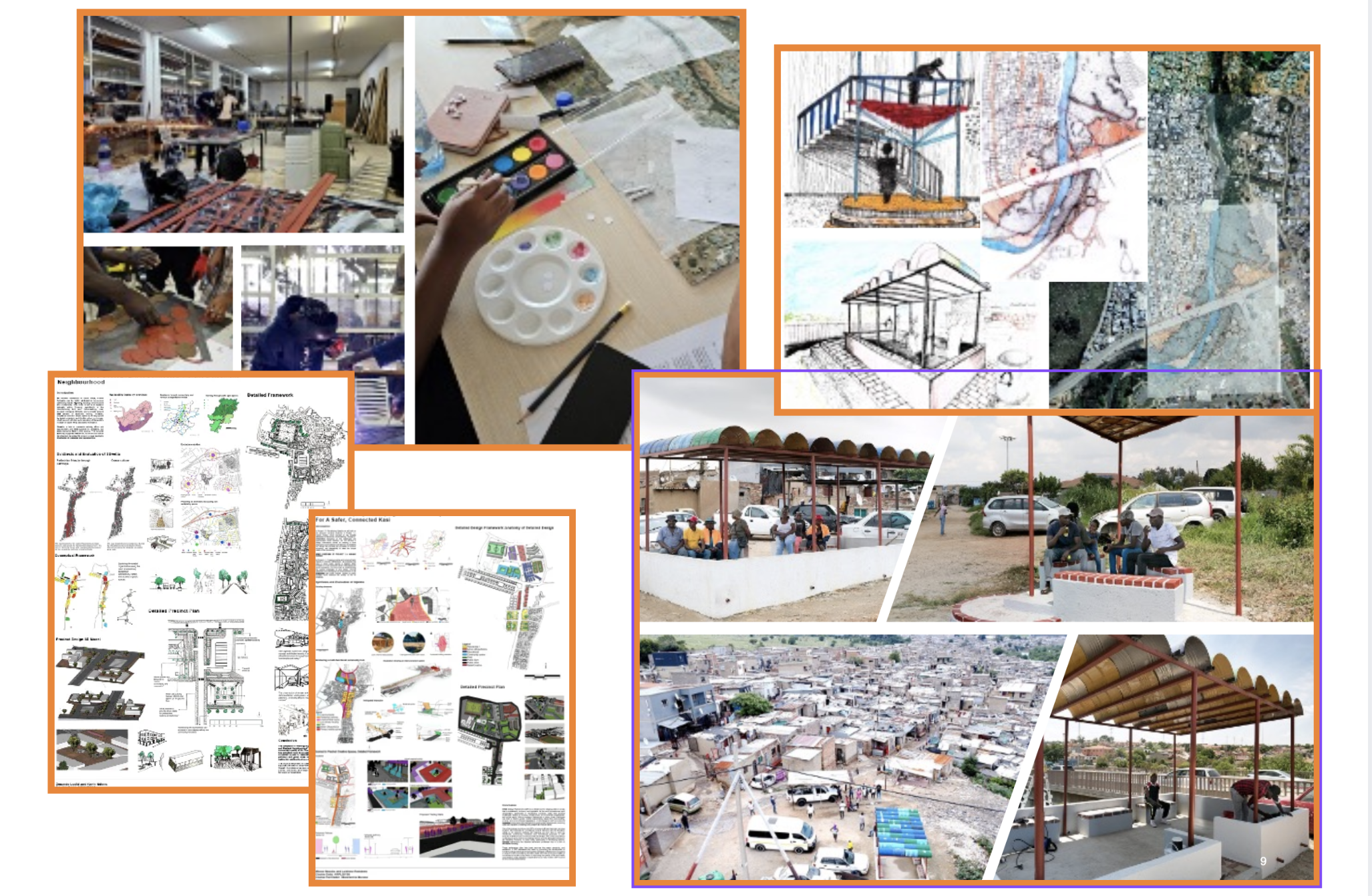
SACN’s more recent collaboration with the Wits CUBES Kelvin-Alexandra-Frankenwald City Studio on the safety shelters project illustrates the role of young planning and architecture scholars in reimagining our city spaces. Students engaged in spatial inquiry, producing visual renderings such as posters, sketches, and models, which culminated in the construction of two safety shelters in Alexandra Township.
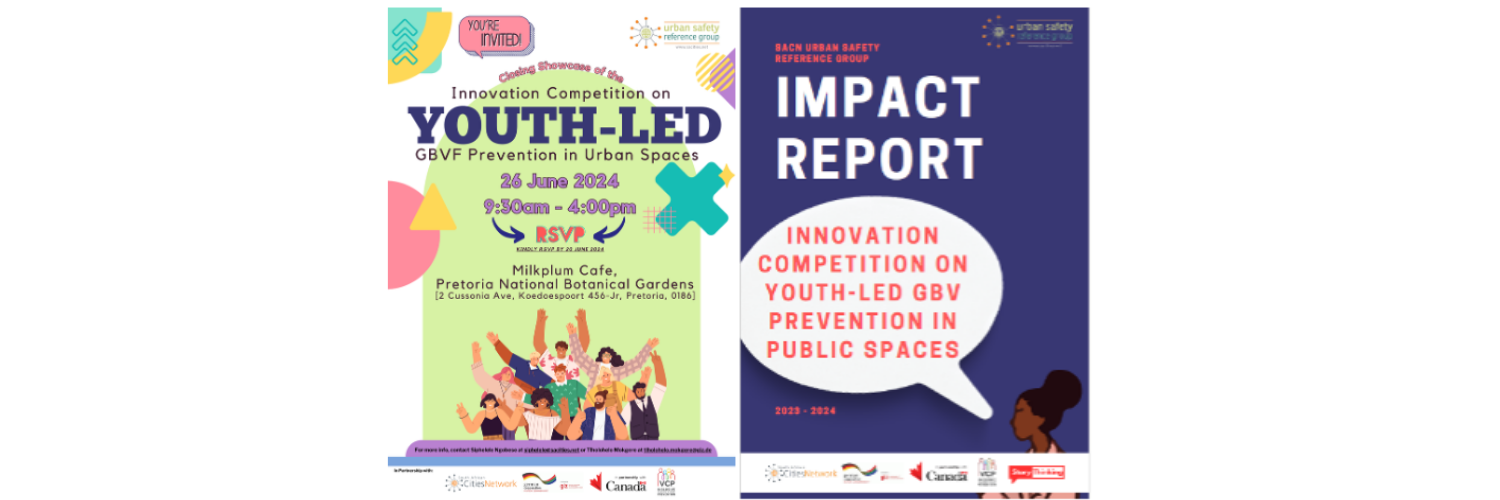
Youth are actively involved and motivated to find solutions in their local contexts. The Innovation Competition on Youth-led GBV Prevention in Public Spaces demonstrated how to harness this potential by showcasing many inspiring youth initiatives that create safer communities and public spaces. SACN supported selected youth initiatives to achieve greater social impact through a 9-month-long process of in-depth training in design thinking, project preparation, monitoring and evaluation, among other skills.
Empowerment through civic education and practical tools for institutions: SACN partnered with organisations such as Activate Change Drivers to deliver voter education through a ‘skillshare’ series. Recognising the gap of haphazard youth engagement and poor youth participation in urban governance and development, SACN also developed the SA Cities Youth Engagement Toolkit, targeted at government officials.
What have we learned:
- Youth are interested and driven to participate. Institutions responsible for youth portfolios must invest in empowering them to be knowledgeable, informed actors.
- While data is important, what we measure about youth also needs to speak to youth agency, pro-activity, contribution and potential, not just the challenges. Youth are knowledgeable and capable of shaping knowledge. Knowledge systems must co-create with youth, rather than be extractive.
- Get young people in important rooms and decision-making spaces. Amplify their voices in critical conversations and processes that shape our cities.
Looking Ahead
Going forward (2026 – 2031), SACN research and engagement will focus on pathways to equitable youth participation in urban economies. The cultural and creative economy is regarded as a critical pathway for youth to share in urban prosperity. Emerging sectors in the digital economy are also important sites of intervention, together with the green economy. Youth participation and voice in the Just Urban and Energy transitions will be the focus of inclusive urban economies work.
SACN’s approach is a practical example of possibilities beyond the symbolic.
From the outset of its youth-focused programming, the organisation was intentional about positioning young people as co-creators rather than subjects of research. SACN went further by harnessing youth voice, empowering, and enabling meaningful contributions to the kinds of cities we all aspire to: inclusive, spatially just, and environmentally sustainable. In the future, SACN will take a deeper dive into young people sharing in urban growth and prosperity.
 Siphelele Ngobese, Programme Manager: Productive Cities, to contact her, email siphelele@sacities.net